Why a Lane Feels Different in Each Direction
Why a lane feels different in each direction: use a simple two-way route routine to read gradients, bends and landmarks with greater confidence.
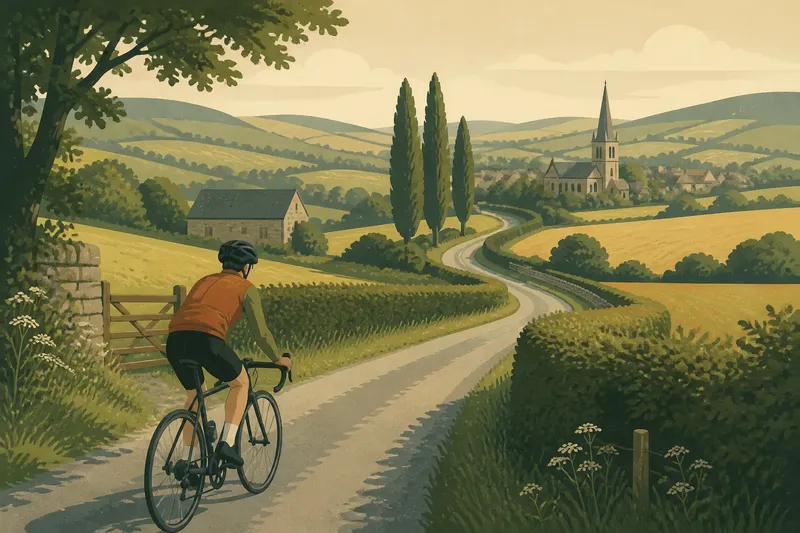
The common mistake on a familiar lane is to treat the return ride as the outward ride in reverse. Why a lane feels different in each direction becomes clear when a climb turns into a descent, a hedge hides a junction from the other side, and a church tower appears before a bend rather than beyond it. The cost of overlooking those changes is not merely a different mood: you can misjudge where to ease off, where a view opens, and which landmark will help you place yourself.
A lane is experienced as a sequence, not as a line on a map. Its gradient, curves, sightlines and roadside details arrive in a particular order, and that order changes with direction. A short routine spread across a week can help you notice the differences without turning an ordinary ride into a survey.
Begin with a lane you can ride both ways
Choose a familiar route with a clear turning point, such as a village green, a bridge or a crossroads. It should include a little variation: perhaps a shallow rise, a bend screened by trees and a stretch where fields open out. Avoid making the first comparison on a lane whose surface or traffic demands all your attention.
Keep the route modest enough that you can remember its features afterwards. A paper map or a saved route on a phone can help identify the lane’s shape, but the purpose is to observe what the road does on the ground. Do not try to record every gate and driveway; a few meaningful changes are easier to compare.
Ride out without trying to explain everything
On the first outward ride, notice the order in which the landscape changes. You might pass a farm entrance, begin a gentle rise, meet a right-hand bend and then see a distant church. The same details may be familiar, but their order is what gives the journey its particular character.
Pay attention to gradient in practical terms. A rise that begins gradually can be easy to miss when approached from a lower field, while a short, steeper section may announce itself only when the road straightens. Look ahead where visibility permits, but keep your attention on the surface and other road users; there is no need to stare at a landmark while moving towards a bend.
Notice what each curve allows you to see. A hedge, bank or high field edge can screen the road beyond, making the lane seem to fold away. Where the land opens, a bend may feel gentle because its exit is visible. A map gives the curve’s outline, but not the experience of what is concealed or revealed from the saddle.
Use the return ride to reverse the sequence
Turn at the planned landmark and ride back without assuming that a familiar feature will serve the same purpose. From the opposite direction, a church tower may be hidden behind trees, a farm entrance may appear before the climb, and a downhill stretch may make a bend arrive sooner than your memory expects.
Consider the sightline before each bend, rather than relying on how the road looked on the outward leg. If the bend is blind from this approach, ride at a speed that leaves room to respond to what you cannot see. A clear view from the other direction does not tell you that this approach is clear too.
The gradient changes the effort and the timing of your attention. A climb may encourage you to look down at the road immediately ahead; a descent may make the same section feel shorter and bring a junction into view quickly. The useful question is not whether one direction is easier, but what each direction asks you to notice and when.
Make a simple record of what changed
After the ride, jot down a few observations while the route is still fresh. A small notebook works well; so does a note attached to the route on a mapping app. Record a cue and its position in the sequence, rather than trying to write a full account.
- Where did the road begin to rise or fall?
- Which bend hid the road ahead, and from which approach?
- Where did a hedge, wall or bank open or close the view?
- Which landmark appeared first in each direction?
- Where did the surface, junctions or roadside entrances call for closer attention?
Keep the notes descriptive. “The chapel appears after the left bend on the return” is more useful than “the return is confusing”. The first entry gives you a recognisable cue; the second offers a judgement without showing what produced it.
Repeat the comparison on a different day
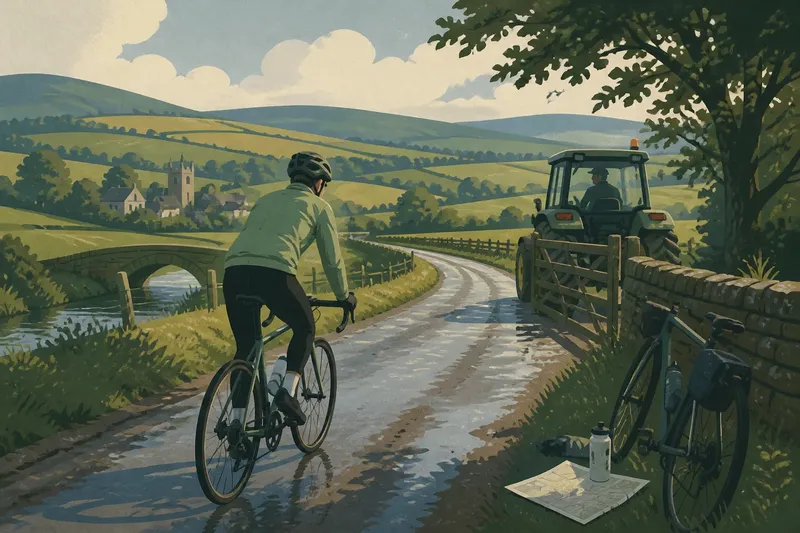
Leave the route for a day or two, then ride it again in the same order. You are checking which impressions came from the road’s shape and which came from temporary conditions. A low sun can make a hedge cast a long shadow; wet leaves can make a bend demand more care; a field entrance may be busy during nearby work.
Do not try to recreate identical conditions. Instead, add a brief note when something changes the view or the feel of the road. That distinction helps you separate stable cues, such as the order of a climb and bend, from things that vary with light, weather or activity. It also keeps a route note from pretending the lane is always the same.
For this repeat, choose one feature to watch closely. You might compare where the church first appears, or notice whether a low wall makes the far side of a bend visible. A single question gives the ride a thread without demanding constant analysis. The rest of the lane can remain an ordinary ride.
Say you want to remember a village approach
Say you ride from a ridge towards a village and often fail to recognise the approach until you reach the first houses. On the outward leg, you note that the road descends past an old stone barn, then bends left before a line of poplars. On the return, the poplars appear before the barn, which is partly screened by the rising ground.
Next time, you can use the poplars as an early cue when leaving the village and the barn as a later cue when climbing towards the ridge. The expected observable result is a clearer sense of where you are in the sequence, not a promise that the lane will feel familiar in every light or condition. The record helps because it describes what comes into view from each approach.
What should you notice on a two-way lane?
Why does the climb feel longer in one direction?
A climb can begin gently and steepen later, or start abruptly and ease before the crest. Approached from the other side, those same sections arrive in reverse order, changing how effort and distance seem to unfold.
Why does a bend look tighter on the return?
A bank, hedge or building may conceal the bend’s exit from one approach while leaving it visible from the other. Read the sightline you have now rather than borrowing confidence from the opposite direction.
How can landmarks help with route memory?
Use landmarks as cues in a sequence: one appears before a rise, another after a bend. Note which direction brings each into view first, since a familiar object can be hidden or arrive at a different point in the journey.
Should I change my route notes after wet weather?
Add a note when rain, leaf fall or glare alters visibility or makes a particular surface more demanding. Keep that observation separate from the lane’s enduring shape, so a temporary condition does not erase a useful direction-based cue.
Keep the routine light enough to repeat
A useful week need not contain a special ride every day. Ride the chosen lane outward and back once, make a few notes, then repeat the comparison when the week allows. If you pass the same lane on another outing, use that journey to check one cue rather than starting a fresh record.
It is not worth the effort to catalogue every field gate, count every curve or stop at each landmark for a photograph. Those habits can make the route feel like an assignment, and an exhaustive record quickly becomes hard to use. Keep the observations that help you anticipate what becomes visible next.
Why a lane feels different in each direction is often a matter of sequence: the same rise, bend and landmark arrive in a changed order, under a changed view. A concise pair of notes can make that pattern easier to remember. On a later ride, let the notes guide your attention, then leave them in your pocket and ride the lane as it is that day.