The Myth of the Perfect Average Pace on a Countryside Ride
A countryside ride’s average pace can hide its real purpose. Learn what to notice instead, from lane surfaces and pauses to the shape of the outing.
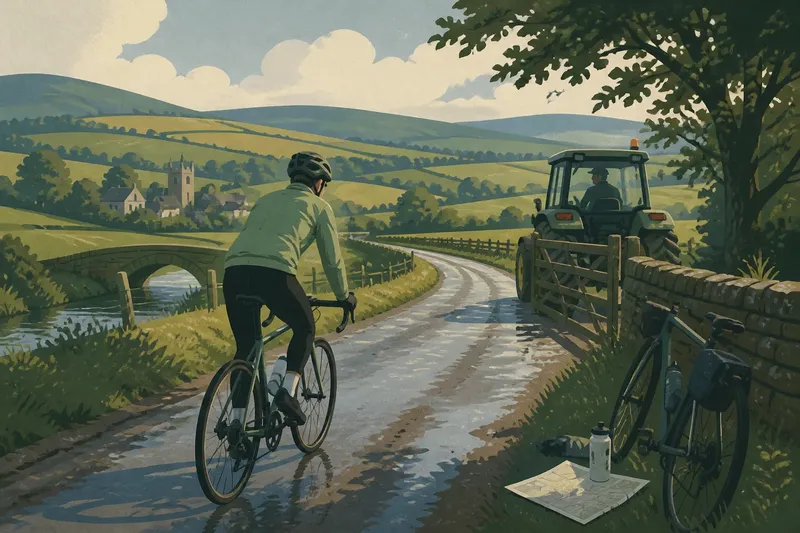
The most common mistake with average pace on a countryside ride is treating one number as a verdict on the whole outing. A quiet lane, a muddy stretch and a stop to let a farm vehicle pass all alter the figure, while the ride’s purpose may have had little to do with speed in the first place.
A pace target can be useful for a particular training session, but it is a poor summary of a day spent crossing varied ground. The better question is what you set out to do: reach a village, keep a companion comfortable, look closely at the changing landscape or return with enough daylight to spare.
Average pace flattens a ride with a varied surface
On a countryside route, the surface changes often enough to make a steady pace an unrealistic expectation. Tarmac through a village may give way to rough patching, loose grit, damp leaves or a narrow lane edged by standing water. Each calls for a different balance of speed, attention and control.
A bicycle can roll freely on a smooth descent and then lose momentum on a rutted climb. That contrast is not necessarily a sign of poor riding. It may be the sensible response to changing grip and visibility.
Rather than judging the whole ride by its average, notice where the pace changed and why. If a rough section demanded care, taking it slowly was part of riding well, not a failure to maintain the number.
Stops belong to the outing, even if they disappear from the figure
There is a difference between time spent moving and time spent out on a ride. A pause at a bridge to check a map, a brief conversation at a farm gate or a stop to take a drink can all be part of the day’s rhythm. The average pace recorded by a cycling computer may omit those moments or treat them in a way that obscures their place in the outing.
That distinction matters when comparing rides. One route might pass straight through familiar villages; another might invite a look at a churchyard, a riverside path or a view across the fields. A lower average does not tell you which ride felt more rewarding, or which one better suited the available afternoon.
It is not worth trying to eliminate every pause just to make the number look cleaner. If the outing is meant to be unhurried, an extra stop may be evidence that it is going to plan.
Choose a purpose before choosing a pace
A useful aim gives a ride direction without requiring every stretch to feel alike. You might plan to reach a particular village before turning home, ride comfortably alongside a less experienced companion, or keep a familiar loop easy enough to notice the season’s changes. Those aims shape decisions more clearly than an all-purpose pace target.
For a fitness session, a planned effort can make sense on a suitable, familiar section of road. On an ordinary countryside outing, the purpose may be to travel steadily where the lane allows and ease off where it does not. The same person can have both kinds of ride; the useful distinction is knowing which one is happening today.
Imagine you have allowed an afternoon to visit a village shop and return before dusk. If a narrow lane is wet and a tractor is approaching, easing off and letting it pass serves the outing better than trying to preserve an average. The observable result is a calmer passage and a ride still directed towards its destination.
What should you pay attention to instead?
Should I use average speed to compare two rides?
Only if the rides had similar conditions and a similar purpose. A route with more stops, rougher surfaces or slower traffic can produce a different average without saying much about your riding or enjoyment.
Is a slow countryside ride still worthwhile?
Yes, if its pace suits the reason you went out. Moving comfortably through a village, keeping company or taking in a familiar landscape are all valid aims that a speed figure cannot describe.
When does a pace target help?
It can help when you have deliberately planned a training effort and can choose an appropriate stretch for it. For a mixed-surface or social outing, a flexible intention is usually more useful than trying to hold one number everywhere.
What should I record after a ride?
Alongside distance or moving time, note the route, the surface and what made the outing worthwhile. A short comment such as “easy loop, wet lanes, stopped at the mill bridge” can make the record more meaningful than the average alone.
Let the lane set the rhythm
Some parts of a countryside ride invite a relaxed turn of the pedals; others ask for attention before speed. A blind bend, a cattle grid, loose gravel by a gateway or a car waiting to pass all change what a considerate pace looks like. There is no virtue in carrying one rhythm through conditions that call for another.
That does not mean abandoning intention whenever the road varies. It means keeping the purpose in view and adapting the effort to the moment. If you are riding with someone, a quick check-in at a junction can be more useful than assuming that a shared average means you are both comfortable.
There is also a practical difference between pace and progress. A headwind can make a familiar road feel demanding, while a tailwind may make the return leg seem unusually easy. The average records some of that variation, but it does not explain it; a note about wind, surface or company often supplies the missing context.
Make the ride record describe the day
A cycling computer or phone app can be useful, but its figures are only one part of a ride record. Consider noting a few details that explain the outing:
- Purpose: record whether the ride was for exercise, company, a visit or a quiet circuit.
- Surface: note where gravel, mud, broken tarmac or leaf cover changed your pace.
- Conditions: mention wind, rain or poor visibility if they affected the route.
- Stops: record a useful pause, such as checking a diversion or waiting for a companion.
- Route decision: note why you took a quieter lane or turned back early.
These details are not a more complicated scoring system. They help explain why the ride unfolded as it did, and can make a familiar loop easier to choose next time. If you want a simple comparison, compare rides that had similar aims rather than expecting one average to compare everything.
Keep the number in its proper place
Average pace is a description of movement, not a measure of the character of a countryside ride. It can help answer a narrow question about a planned effort, but it cannot tell you whether you chose a suitable lane, made room for another road user or gave the afternoon the shape you wanted.
For an average pace on a countryside ride to mean anything useful, read it beside the purpose and the conditions. A note about the lane, the weather or the companion beside you can turn a bare figure into a record of the day. That is enough to make the next ride easier to plan without asking every outing to resemble the last.