A First Autumn Ride, Planned Around the Shortening Day
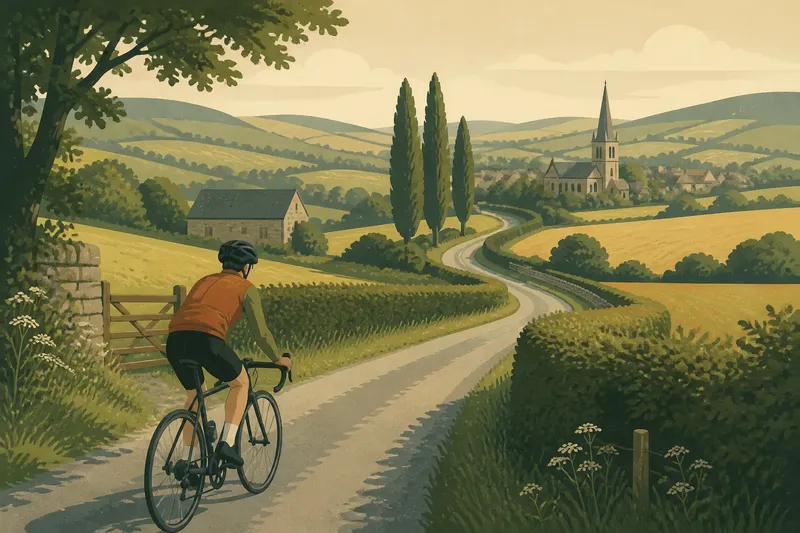
Plan a first autumn ride around the shortening day: choose a modest turning point, leave time for pauses and return with daylight to spare.
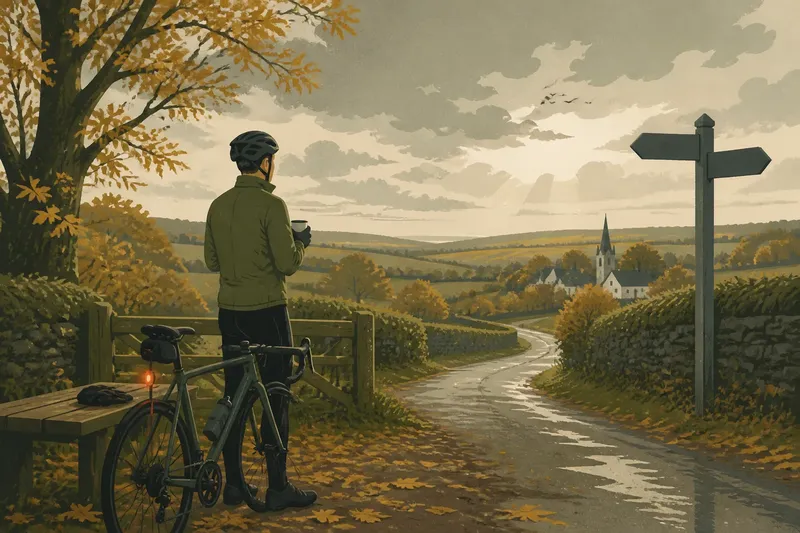
The common mistake on a first autumn ride is to copy a summer route and hope the afternoon will stretch to fit it. A ride planned around the shortening day starts with a modest turning point and treats pauses, changing weather and the return journey as part of the route, not interruptions to it.
That small adjustment changes the character of the outing. Instead of chasing distance, you can notice the damp leaves gathering along a hedge, stop at a village shop, and still have a calm ride home before dusk makes familiar lanes harder to read.
Let the available daylight set the shape
Start with the time you can comfortably be back, rather than the furthest place you might reach. Check the local sunset time for the date, then allow a margin for slow junctions, a longer pause or an unplanned diversion; the margin should reflect how well you know the roads and how easily you can shorten the ride.
Daylight is not simply a finishing line. Low sun can make a lane pleasant in one direction and awkward in another, while cloud or tree cover may make the light feel dim earlier than expected. A route that brings you onto busier roads near dusk deserves more caution than one that stays on familiar, quiet lanes.
For a first outing of the season, use a route you can adapt without needing a complicated detour. A village, bridge, common or clearly marked junction can serve as a turning point. Pick one with a straightforward way home, and note an earlier point where you could turn back if the day feels different from the forecast.
Choose the plan that fits your afternoon
The right outing depends on what is shaping your day. Choose the situation closest to yours and let it set the route’s ambition.
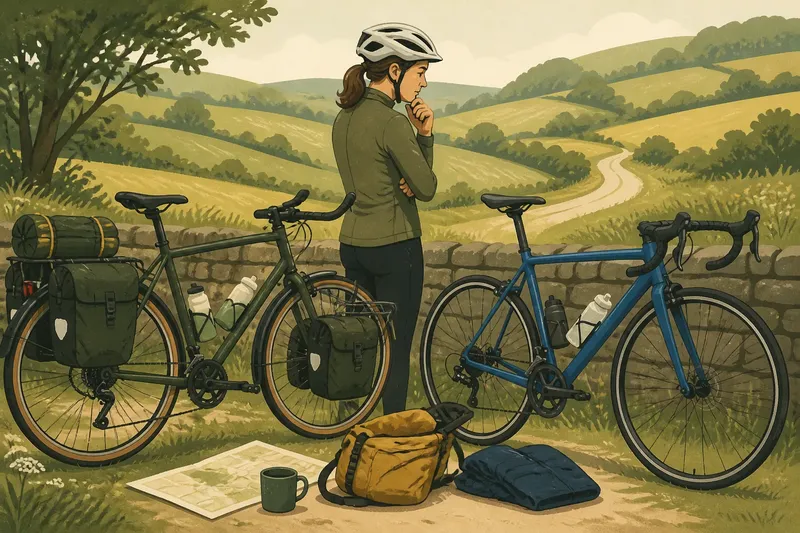
- You have a free, settled afternoon. Choose a familiar loop with a modest destination and a clear return. This suits a first autumn ride because the route gives you room to enjoy the change of season without asking you to improvise far from home.
- You have a fixed appointment or household task. Plan an out-and-back to a point you can reach well before you need to leave for home. It fits because the distance can be reduced simply by turning earlier, rather than relying on a loop with an uncertain shortcut.
- The forecast is mixed or the wind is exposed. Choose a shorter route with sheltered alternatives, such as lanes alongside hedges or a return through a nearby village. This leaves options if rain arrives or the headwind makes the outward leg slower than expected.
- You are returning after a long break. Make the turning point somewhere comfortable to pause, not somewhere impressive on a map. A familiar café, bench or village green gives the outing a natural purpose while keeping the ride easy to cut short.
Imagine you have a free afternoon, but the sky is clouding over and you are unsure how your legs will feel. You choose the next village as the main turning point, mark a nearer bridge as an early return option, and leave time for a drink there; the expected result is a ride that can remain pleasant even if you turn back sooner than planned.
Make the turning point deliberately modest
A turning point is useful because it gives the day a shape, not because it marks a target you must reach. Choose somewhere with a visible reason to stop: a viewpoint over fields, a shop for water, a sheltered bench, or a junction that makes the return route obvious.
Look at the route as two separate journeys. The outward leg may feel easy with a tailwind or a gentle descent; the return can be slower, especially if the wind has changed your effort. Avoid judging the whole plan by how quickly the first part seems to pass.
It can help to identify two possible turning points before setting off. The nearer one is your comfortable choice; the farther one is for an afternoon that feels settled and unhurried. There is no need to decide in advance which one counts as success.
Leave pauses in the day, not just in the route
Autumn invites small stops: a gate with a view, a lane edged with fallen leaves, or a shop where you can warm your hands around a drink. Allowing for these moments prevents the return from becoming a race against the light. A pause can also be a practical point to check the sky, your comfort and the time.
Keep the pause simple. Choose somewhere that does not obstruct a gate, driveway or narrow path, and make sure you can set the bicycle securely without blocking other people. If you stop to take in a view, look for a place away from moving traffic rather than lingering at a blind bend.
There is little value in trying to make every stop scenic or turning the ride into a tightly scheduled itinerary. A single comfortable pause is often enough; too many planned destinations can make a gentle outing feel like a list of obligations.
Prepare for the light and the lane
Before leaving, check the forecast, the route surface and whether any familiar lanes are likely to be muddy or leaf-covered. Carry lights even if you expect to return in daylight, and make sure they are charged or have working batteries. A rear light can help others notice you in dull conditions, while a front light helps you see the road when the light fades.
Wear layers that you can adjust during the ride. A light waterproof jacket may be useful if showers are possible, and gloves can make a cool descent more comfortable. Keep a phone, a means of payment and a small puncture kit if you know how to use it; bring only what suits your bicycle and the route.
Do not treat a familiar road as automatically easy in autumn. Wet leaves, gravel washed from a field entrance and shaded patches can alter the surface. Ride at a pace that lets you respond, particularly near bends, junctions and farm access points. Follow the bicycle and light manufacturers’ instructions and any local rules where they apply.
Which autumn ride plan fits your day?
How far should I ride on my first autumn outing?
Choose a distance that leaves you comfortable with the return, rather than one that matches a summer routine. If your recent rides have been shorter, make the turning point nearer and treat any extra distance as optional.
Should I ride a loop or return the way I came?
An out-and-back is often easier to shorten because you can turn around at a known point. A loop can suit a settled afternoon if you have checked the route and know where a simple early exit is possible.
What should I do if the weather changes?
Turn back or use the nearer route home if rain, wind or poor visibility makes the planned ride less comfortable. Keep your phone accessible and avoid extending the route just to reach the original destination.
Do I need lights if I expect to be home before dusk?
Carrying working lights is a sensible precaution because cloud, tree cover or a delay can make a lane dim sooner than expected. Check that they are secure and ready before setting off, rather than waiting until the return.
Use the return journey as your guide
Once you are moving, reassess the plan at the turning point. Notice whether the wind is stronger than expected, whether the road surface is tiring, and whether the available light still feels comfortable. If any answer gives you pause, take the nearer route home.
That judgement is part of the outing, not a retreat from it. A first autumn ride is successful when its route fits the day you actually have: a modest turning point, enough room to stop, and a return that does not depend on the last of the light. Plan the next first autumn ride with that same daylight margin, and let the lane’s changing conditions—not a summer distance—decide how far it should go.